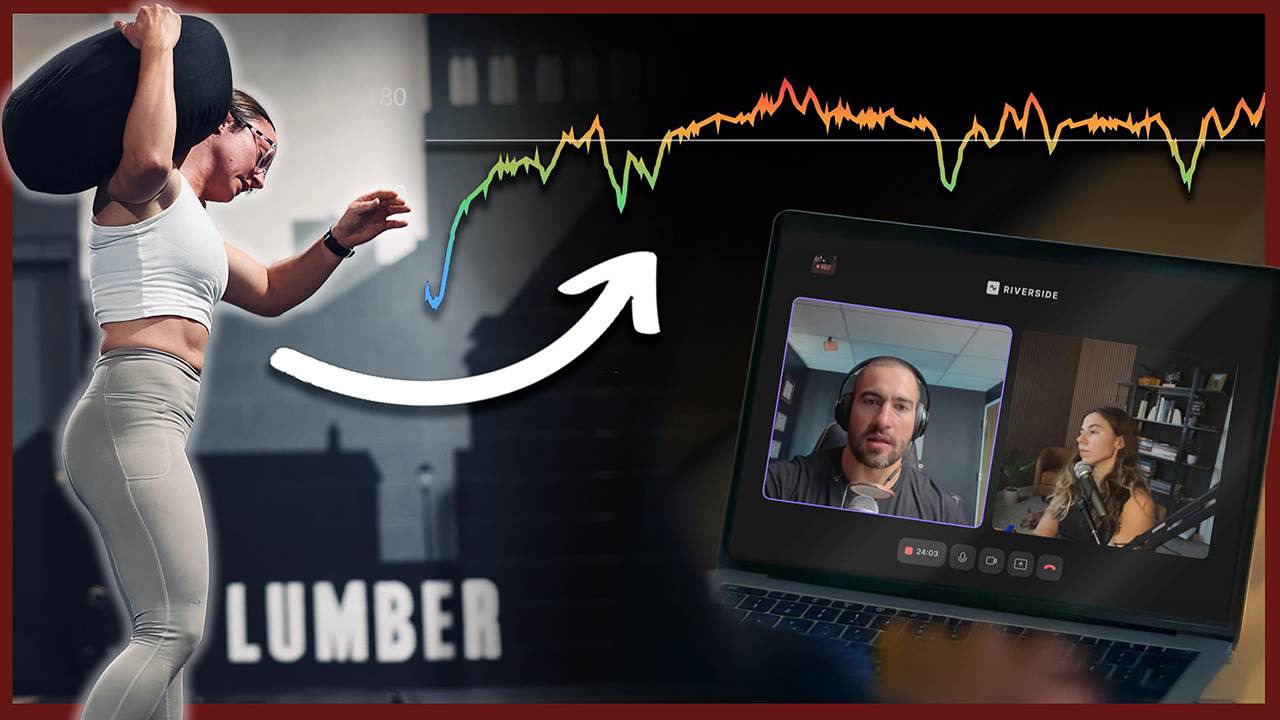
This is the first episode of Versus, a new show where two coaches each design a training program for a real athlete, present and justify it in 10 minutes and then get scored by that athlete’s coach. This time Brennan Schardt and I each wrote a strength week for “Sally” (not her real name), a professional triathlete who is Day Muñoz’s athlete, and Day judged us.
The short version: Brennan wrote a simple, practical, meat-and-potatoes three-day week that a triathlete could do in almost any gym. I wrote a more creative, machine-heavy week with plyometrics, blood flow restriction and a “kitchen sink” third day that runs far too long. Day gave Brennan a 3 on flow and a 5 on practicality, and gave me a 4 on flow, a 2.5 on practicality and a 5 on artistry. Brennan’s one regret was leaving out plyometrics, which my week included. The audience picks the winner in the comments.
Who was the athlete?
Day introduced Sally. She’s in her mid-20s with a swimming and running background, and running is her strongest discipline. She grew up swimming, moved into running around middle school, was recruited by multiple NCAA Division I programs and committed to Oregon for distance cross country. She ended up in the University of Arizona’s triathlon program and now races professionally in the Ironman series, including the 70.3s.
She’s tall, so she doesn’t gravitate to traditional strength training, but she and Day have worked together for three years and made a lot of progress. Her upper body is usually the lagging area, and lower-body strength matters for cycling and running. Importantly, she had just finished a series of races, so this was the time to accumulate training volume and push loads without risking an important race. For more on strength work for triathletes, listen to strength and conditioning for triathlon training, strength training for triathlon with Day Muñoz and Wes Johnson, head triathlon coach at the University of Arizona.
How does Versus work?
Each coach gets about 10 minutes to present a program. The athlete’s coach then rates each of us from 1 to 5 in four categories: flow (the quality of the skeleton and template), effectiveness (good principles that meet the athlete’s needs), practicality (ease of implementation) and artistry (creativity, originality and X factor). Day doesn’t name a winner. That’s your job.
What did Brennan program?
Brennan didn’t know much about triathlon, so he leaned on RPE instead of percentages and kept the week to three simple sessions:
- Session 1 (lower body and grip): front squats (5 × 8 at RPE 7, with a slow, controlled descent), dumbbell RDLs (3 × 10), Bulgarian split squats (3 × 8 per leg) and a superset of farmer’s carries (3 × 30 meters) with a side plank. He noted that gripping handlebars on a bike makes grip work worthwhile.
- Session 2 (upper body push and pull): tall-kneeling landmine press (4 × 8 per arm), incline dumbbell bench press (3 × 6–10), and a superset of lat pulldowns (3 × 6–10) and dumbbell prone rows (3 × 10), with 60–90 seconds of rest.
- Session 3 (trap bar deadlift day): an elevated trap bar deadlift (5 × 6 at roughly 65% of a 1-rep max), dumbbell push press (3 × 8), and a superset of rotational medicine ball slams (3 × 5 per side) and a Copenhagen plank (3 × 30 seconds).
Brennan’s own critique: he wished he’d put some plyometrics at the start of each session.
What did I program?
- Day 1: Bulgarian split squats (3 × 8–10 per leg), RDLs from the rack with a 3-second lower, then core work (rotational medicine ball slams and a banded press) and a Hammer Strength machine lat pulldown with each arm working separately. I finished with joint-health pieces: hip airplanes, single-leg balance board work, a weighted PVC raise from behind the back and seated dumbbell external rotations.
- Day 2: six sets of plyometrics (assisted, then bodyweight, then band-resisted), banded kettlebell swings to build tension and stiffness (most triathletes are low-tension), and a broad-jump-to-vertical hybrid landing in a crash pad so there’s no eccentric catch phase. Then banded Soren holds, GHD sit-up holds, tibialis raises and calf raises off a slant board.
- Day 3 (the kitchen sink): a 3-minute backward incline walk at 1.8 mph for knee health, a machine circuit warm-up with blood flow restriction cuffs, hack squats, a Smith machine kickstand RDL, machine hip thrusts in ascending sets of 4, 6, 8 and 10, a chest-supported row superset with a low-incline dumbbell row, and a 5-minute belt squat march holding a 10-pound medicine ball. This is obviously more than it should be, and it’s not a day before an important session.
The hack squat and belt squat are great options for athletes who want leg strength without much forward knee travel. Read more in building squat strength for athletes with cranky knees and how to build squat strength without knee pain.
How did Day score us?
| Category | Brennan | Ben | Day’s notes |
|---|---|---|---|
| Flow | 3 | 4 | Brennan’s lower, upper, mixed layout was clear and simple, but she’d check whether hamstrings get hit through the hips or the knees across days. Mine was engaging, but she wanted it clearer what each day was hitting |
| Effectiveness | Not scored | Not scored | Brennan covered general strength well but could add plyometrics, more pulling and small arm accessories. My machines and core work fit the off-season, and more volume suited her, though a two-hour session is wild |
| Practicality | 5 | 2.5 | Brennan’s week fits a 45-minute window and an apartment gym. Mine needs a crash pad, BFR cuffs and a full machine room |
| Artistry | Not scored | 5 | Brennan’s week was very meat and potatoes, and she suggested adding something new to keep athletes engaged |
I’ll admit I tend to get “shiny object syndrome” when I program, and it shows. That’s why the flow score for my week is only a 4.
What can you take from this battle?
- Write for the athlete’s real life. A program that takes two and a half hours to write and 90 minutes to do isn’t practical for someone with a job, school and swim, bike and run sessions. See how I balanced lifting and running for a masters athlete.
- Don’t forget plyometrics for endurance athletes. Brennan’s one regret was leaving them out.
- Use the off-season to build. Machines and higher volume are fair game once the race calendar clears. For more on loading, read the role of hypertrophy.
- Know your athlete. Brennan and I were writing blind, and without knowing her percentages he had to use RPE. For more on that choice, listen to zones vs. pace, RPE vs. percentages.
Want a plan built for your sport? Meet our coaches, including Day Muñoz. More battles: the masters CrossFit competition prep battle. Tell us in the YouTube comments who you think won.